Pages

Powered by Blogger.

Monday, August 3, 2015

Labor Law Factors in Foreign Direct Investment: A Preliminary Comparison between Brazil and China


姜朋**    -   丽吉娅·毛拉·科斯塔***    -   陈涛涛**** 


摘要:在对外直接投资中,母国与东道国法律环境的差异会对实施对外投资的企业造成很大困扰。巴西与中国的劳动法就明显存在差异。这在对投资巴西的中国企业构成了严峻的挑战。本文对巴西与中国劳动法的立法体例、劳动法适用的对象以及与企业关系密切的若干具体制度加以比较,以期为投资巴西的中国企业提供有益的启示和借鉴。
关键词:劳动法;劳工保护;直接投资;巴西;中国


Labor Law Factors in Foreign Direct Investment: A Preliminary Comparison between Brazil and China


By   Peng JIANG,    Ligia Maura COSTA   Taotao CHEN


Abstract: In foreign direct investment, the huge gap of legal environment between the home country and the host country usually confuses the investing companies. Taking Brazil as an example, its complex labor legislation is quite different from China. Therefore, the companies based in China have to face great challenges when making direct investment in Brazil. This paper focuses on the comparison of these two countries’ legislation systems on labor, the applicable employees and their statutory labor rights, as well as the relative issues that are important to the enterprises, in order to provide the beneficial introduction and reference to Chinese enterprises and smooth their investments.

Key words: labor law; labor protection; direct investment; Brazil; China

Available at Journal of International Economic Cooperation


** 清华大学经济管理学院副教授。
*** 巴西Fundacao Getulio Vargas大学商学院教授。
**** 清华大学经济管理学院教授。


Wednesday, July 15, 2015

DESAFIOS DE UMA OMC SUSTENTÁVEL


Desafios de uma OMC Sustentável
Ligia Maura Costa 

Estadão. Blog Gestão Política e Sociedade, 14 de julho de 2015.

Os elogios à Organização Mundial do Comércio (OMC), que acabou de completar vinte anos, podem ser precipitados se seus países membros não atrelarem o desenvolvimento sustentável aos objetivos de livre comércio. Para ler o artigo, clique aqui


Friday, July 10, 2015

RAE eletrônica - Battling corruption through csr codes in emerging markets: oil and gas industry

RAE eletrônica - Battling corruption through csr codes in emerging markets: oil and gas industry

Battling corruption through CSR codes in emerging markets: oil and gas industry

Combatendo a corrupção através de códigos de CRS em mercados emergentes: indústria de petróleo e gás natural

Combatiendo la corrupción a través de códigos de responsabilidad social empresarial en países emergentes: la industria de petróleo y gas natural

Wednesday, July 8, 2015

2015 SEMINAR on “Brazilian Business Environment: with Focus on Labor and Taxes matters”


2015 SEMINAR on “Brazilian Business Environment: with Focus on Labor and Taxes matters” 


The Center for China-Latin America Management Studies, Tsinghua SEM is pleased to invite you to 2015 SEMINAR on Brazilian Business Environment: with Focus on Labor and Taxes matters, that will take place on July 29th from 10:00am until 11:30am

Date: July 29th, 2015

Time: 10:00-11:30 

Speaker: Prof. Ligia Maura Costa, FGV’s São Paulo School of Business Administration (EAESP) 

Venue: Room 385, Weilun Building, Tsinghua SEM 

Working Language: English 


Program

10:00-10:10 


Welcome and Introductory Remarks 
Prof. Taotao Chen, director of the Center for China-Latin America Management Studies 

10:10-10:40 

Prof. Ligia Maura Costa, FGV’s São Paulo School of Business Administration (EAESP) 
“Brazilian Business Environment: with Focus on Labor and Taxes matters” 

10:40-10:55 

Associate Prof. Peng Jiang, School of Economics and Management, Tsinghua University 
“Comparative Analysis on Chinese Labor Laws” 

10:55-11:30 

Discussion 

All scholars and interested companies, who are focusing on investing in Brazil, are warmly welcomed to participate in this workshop. 

Contact: 


Thursday, June 25, 2015

AN OVERVIEW ON EMPLOYMENT AGREEMENTS IN BRAZIL AND IN CHINA


An Overview on Employment Agreements in Brazil and in China


by Ligia Maura Costa and Peng Jiang


The paper is available at Business and Management Review, v. 4, n. 12, 2015 and also available online on this link


Abstract

This paper intends to compare Brazilian and Chinese labor legislations related to employement agreements, and to explain how they influence the way of doing business in both countries through a comparative analysis of the most relevant aspects. From an economic, political and historical perspective, labor legislation impacts wages, employment, domestic consumption and economic growth, among others. Employement agreements legislation affects labor market outcomes and business operations. This paper compares both legislations and concludes that regulatory changes have to be made in the near future in Brazil, in particular, but as well as in China; in order to provide a more effective environment to attain a sustainable economic growth. 


Friday, June 5, 2015

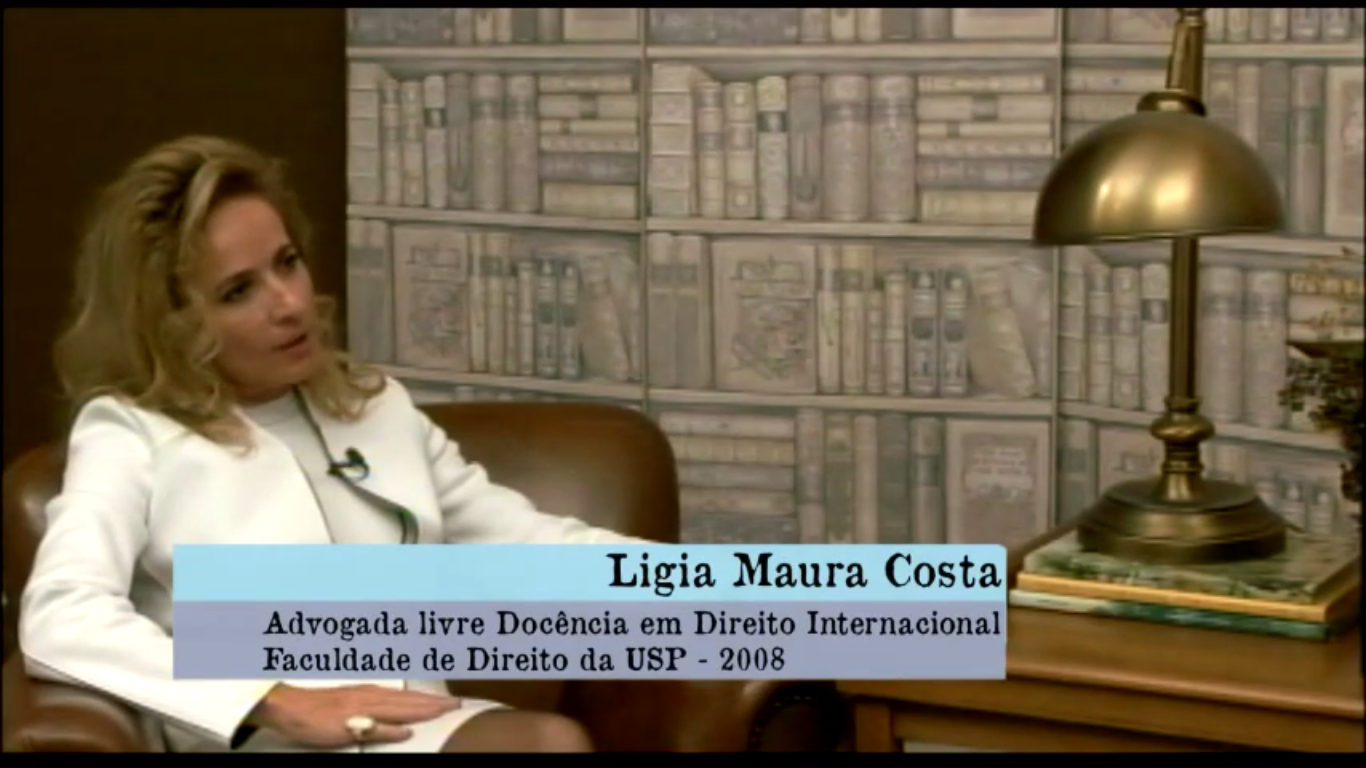
Alfredo Scaff Convida: Questões Internacionais em relação ao Brasil

Alfredo Scaff Convida

Principais Temas Tratados na Entrevista:

- Execuções na Indonésia
- Situação na Venezuela
- UNASUL
- MERCOSUL
- Itamaraty e o Mundo
- Regras propostas ao BNDES

Para assistir à entrevista, click nesse link


Monday, April 13, 2015

REPORT ON THEMES PROPOSALS FOR 2016 G20 CHINESE PRESIDENCY


【将可持续发展纳入多边贸易体制】


G20: Trade and Sustainable Development

The paper is in Chinese on this link


Friday, March 27, 2015

Negotiations in BRICS Countries
 A Survey
Do you want to know how BRICS negotiators handle their negotiations? 

If your answer is YES, please spare five minutes of your time by completing this survey.

I will be pleased to share the results of the survey with you.

Thank You! 
Please note: The information that you provide will be used for analysis purposes only and no responses will be attributed to individuals or organisations. All responses will be looked at in strict confidence, with the results made available in aggregate form only.

Tuesday, March 24, 2015

NEGOTIATION IN BRIC COUNTRIES - A SURVEY

Negotiation in BRIC Countries - A Survey


Are you Brazilian? Are you Russian? Are you Indian? Are you Chinese? If you have any of these nationalities, I would very much appreciate if you could spare five minutes of your time by completing this survey

Thank You !

Please note: The information that you provide will be used for analysis purposes only and no responses will be attributed to individuals or organisations. All responses will be looked at in strict confidence, with the results made available in aggregate form only.

Saturday, December 20, 2014

POR QUE PRECISAMOS DE UM NOVO ÍNDICE PARA MESURAR O CRESCIMENTO ECONÔMICO GLOBAL?

Por que Precisamos de um novo Índice para Mesurar o Crescimento Econômico Global?


Os métodos mais utilizados para avaliação da performance econômica global dos países são, hoje, o Produto Interno Bruto (PIB) e o Índice de Desenvolvimento Humano (IDH). Porém, eles não levam em consideração muitos dos efeitos negativos do crescimento econômico, como a poluição, as alterações climáticas ou a redução dos recursos naturais e outros temas relacionados ao desenvolvimento sustentável. Em resposta a essa lacuna do PIB e do IDH, o Índice de Riqueza Inclusiva – IRI (Index Wealth Inclusive 2014), recém divulgado pela UNESCO, é um método alternativo para mesurar crescimento econômico sustentável. O relatório IRI analisa 140 países, incluindo os 20 primeiros países examinados no relatório anterior de 2012 (os países do G-20), durante as últimas duas décadas (1992-2010).

A história recente demonstra que o crescimento econômico baseado apenas no PIB não torna os países e suas respectivas economias mais resistente a choques econômicos globais. Muito pelo contrário. A crise financeira mundial de 2008 é a prova do que se afirma aqui. A noção de desenvolvimento sustentável inclui, dentre outros, justiça social, distribuição da renda, pleno emprego, segurança e saúde no ambiente de trabalho, proteção ambiental e bem estar socioeconômico. O IRI é índice com um modelo inovador para mesurar crescimento econômico tendo por fundamento alguns dos pilares do desenvolvimento sustentável. Assim, a diferença do IRI em relação aos outros índices tradicionais como o PIB por exemplo, é que ele baseia o crescimento econômico, fundamentalmente, em três fatores: capital produzido (investimentos em infraestrutura, maquinários e equipamentos), capital humano (habilidades técnicas, educação, saúde) e capital natural (recursos minerais e do subsolo, ecossistemas, atmosfera).
              
Para o IRI, capital humano (habilidades técnicas, educação, saúde) é a maior riqueza de um país e por isso representa um peso de 57% no índice. O IRI–2014 demonstra um resultado decepcionante para o crescimento global de capital humano correspondente a apenas 8%. Já o fator capital natural (recursos minerais e do subsolo, ecossistemas, atmosfera) – representando 23% do IRI – mostra uma redução de quase 30%, na soma total dos países analisados no relatório. O baixo crescimento apontado no fator capital humano e a diminuição significativa em relação ao fator capital natural são as principais causas do índice IRI indicar um baixo crescimento global inclusivo, nas últimas duas décadas. Enquanto o PIB indica um crescimento econômico global de 56%, o IRI aponta um crescimento de riqueza inclusiva de apenas 6%, no período. No caso do Brasil, o IRI indica crescimento econômico inclusivo de apenas 2%, nas últimas duas décadas, ao contrário do PIB que indica que o país teve um crescimento econômico de 40%, no período. Ainda, vários países que tiveram crescimento econômico positivo, segundo o PIB e o IDH, demonstraram redução drástica pelo critério de mensuração do IRI. A América Latina é um bom exemplo. É o caso do Peru, Equador, Colômbia, Bolívia e da Venezuela. Os resultados do IRI demonstram a importância da busca pelos Governos de resultados de crescimento econômico que levem em conta o desenvolvimento sustentável. Todos são unânimes em afirmar os benefícios de um compromisso firme assumido pela comunidade internacional em prol da sustentabilidade. O grande desafio para a comunidade internacional está na definição de como será assumido esse compromisso e de quanto tempo será necessário para sua implementação efetiva. O IRI é um modelo novo e que tem por objetivo suprir essa lacuna em busca de um crescimento econômico mais sustentável.

Para acessar o Índice de Riqueza Inclusiva (Index Wealth Report), 2014, clique aqui.


Ligia Maura Costa. Professora Titular na FGV-EAESP. Faz parte do Conselho Consultivo Científico do Relatório Índice de Riqueza Inclusiva–2014.

Thursday, December 11, 2014

ÍNDICE DE RIQUEZA INCLUSIVA DIZ QUE BRAZIL CRESCEU SÓ 2% EM DUAS DÉCADAS

Índice de riqueza inclusiva diz que Brasil cresceu só 2% em duas décadas

Entrevista à Karina Gomes autora do artigo publicado por Deutsche Welle, em 10 de dezembro de 2014, sobre o Índice de Riqueza Inclusiva - 2014 (Inclusive Wealth Index ou IWR) divulgado pela UNESCO. Clique aqui para o link da matéria.

"Segundo Ligia Costa, professora do Departamento de Fundamentos Sociais e Jurídicos da Escola de Administração de Empresas da FGV-SP, o índice mede de uma forma muito mais eficiente a qualidade de vida da população dos países analisados. 'O PIB não mostra nenhum tipo de melhoria na qualidade de vida e é muito limitado', avalia."


Tuesday, November 18, 2014

ALFREDO SCAFF CONVIDA: ENTREVISTA SOBRE BRICS, OMC, DESENVOLVIMENTO SUSTENTÁVEL E ARBITRAGEM


Alfredo Scaff Convida: Entrevista sobre BRICS, OMC, Desenvolvimento Sustentável e Arbitragem


Alfredo Scaff muito obrigada mais uma vez pela oportunidade de conversar com você no Programa Alfredo Scaff CONVIDA sobre os BRICS, OMC, Desenvolvimento Sustentável, Arbitragem e direito internacional em geral. Foi um grande prazer !! Para aqueles que não assistiram o Programa, mas que se interessam pelos temas tratados, basta clicar nesse LINK


Tuesday, September 30, 2014

HOW TO REACH A BALANCE BETWEEN TRADE AND SUSTAINABLE DEVELOPMENT?

How to Reach a Balance between Trade and Sustainable Development?


Trade considerations are increasingly important in shaping economic policies in all countries, developed as well as developing. A multilateral trading system that supports sustainable development is more important than ever, in order to assist governments to open their economies to global trade. Trade and sustainable development’s amalgamation is inexorable. Progress in one area depends upon progress in the other. A stable and predictable system for international trade is valuable for promoting technological innovation and investments – which are fundamental for sustainable development. In fact, the concept of sustainable development includes social justice, equal income distribution, full employment, safe and healthy working environments, environmental protection and socio-economic welfare. One can argue that the most relevant principles related to sustainable development are embedded in the World Trade Organization (WTO) preamble. The primary assumption is that trade liberalization leads to greater prosperity, which in return creates better condition for sustainable development governance at the global level. WTO recognizes that open trade is not an end in itself. It is tied to crucially important human values and welfare goals captured in the WTO’s founding document, the Marrakesh Agreement. Despite the fact that sustainable development issues are part of the WTO’s mandate, most of the world’s development indicators have been steadily deteriorating in the recent past and at the global level and do not truly take into account sustainable development. Trade liberalization without adequate sustainable development will lead to heavy deterioration, on a global massive scale.

The current methods of valuing global economies, such as the one based on the Gross Domestic Product (GDP), do not take into consideration many negative effects of economic growth related to trade liberalization, like pollution, climate change or reduction in natural resources, among others. After Rio + 20, it seems clear that it is important in the long run a strong commitment from the international community to sustainable development. The recent experience has shown that GDP economic growth does not make economies more resilient to economic shocks. On the contrary, it has made economies more vulnerable. In response to this demand, the InclusiveWealth Report 2012 (IWR) presents an alternative method based in some factors such as a country’s natural, human, and manufactured capital to its overall value. The benefits of committing to sustainability concerns are crystal and clear. The challenge for the international community is to redefine how, and in particular how soon. Will WTO members be able to respond to this challenge? Is WTO the most appropriate forum to enforce sustainable development issues based for instance on IWR guidance basis?

In the Marrakesh Agreement WTO members’ do recognize that trade policies should support raising standards of living, ensure full employment and economic growth, and seek the optimal use of the world’s resources in accordance with the objective of sustainable development. In this regard, the fundamental principles of WTO agreements offer a framework for ensuring predictability and fair implementation of measures that may address sustainability concerns at the international trade level. WTO seeks to achieve a crucial balance: on the one hand, it supports the right of members to take measures to advance legitimate goals related to sustainable development; and, on the other hand, it ensures such measures are not disguised protectionism.

It is true that the extent and nature of the incorporation of sustainable development issues into WTO is still highly contentious among WTO members. There is a major disagreement among WTO members regarding the nature of the WTO’s mandate and its impact on international trade rules. Some argue that trade liberalization plays an important role for countries, both developed and developing, towards sustainable governance policies. Others oppose that WTO’s rules play an important role towards a general decline in sustainable issues. The most contentious source of disagreement among WTO members is how sustainable development issues should be actually enforced for trade liberalization purposes. At this stake, some fear that WTO may demand the advancement of sustainable development norms that not all members may be able to fully implement. Others argue that WTO preamble only obstructs interpretation of WTO rights and obligations from impairing achievement of the highest goals that major international legal instruments claim to promote, namely sustainable development. No one can deny that many of the future challenges facing the WTO system are related to sustainable development issues and the IWR may be a very useful tool. Such issues are likely to include the relationship between environmental challenges such as global warming and trade, and trade and energy, raising living standards, ensuring full employment, using the world’s resources sustainably, among others.

The WTO’s ability to reconcile multilateral trade liberalization with sustainable development is a central concern to the institution’s legitimacy and is, therefore, vital to further advancing free trade at the global level. WTO members have to persuade a skeptical public that trade liberalization can contribute to sustainable development improvement. That’s the reason why an appropriate legal framework within the WTO system is essential to reach a balance between trade and sustainable development. Continuing support for trade liberalization depends on the ability of WTO members to ensure that trade liberalization benefits are widely and sustainable distributed, and then the legitimacy of the trade regime will be widely accepted. Otherwise, WTO will fail to recognize the fundamental message of sustainable development. However, the almost last two decades of WTO have not been encouraging. The Committee on Trade and Development has not achieved anything remarkable. It has continued a record of uselessness that dates back to the old General Agreement on Tariffs and Trade (GATT) level. Most of the cases at WTO Dispute Settlement Body (DSB) concerning import bans related to sustainability issues have been struck down by the WTO because they were, in fact, mere pretexts for disguised protectionism. An analysis of sustainable development issues inside the WTO dispute system shows that from all disputes submitted to the DSB only ten per cent of the disputes were in fact concerned with sustainable development issues (Costa, 2013, p. 344).

Following from that, it is critical that members recognize the current limitations of the WTO legal framework and reach out towards a common agenda on trade and sustainability having the IWR as a valuable reference to advance further developments on this matter on a more concrete way. One can generally say that WTO enforcement on sustainable development is a subject matter of tense controversies among members. However, sustainable development is here to stay. Thus, how can DSB de facto enforce and pronounce itself against the use of sustainable development rules as a disguised protectionism? How can DSB recognize whether the proposed trade measure is truly for the purpose of safeguarding sustainable development issues? In this context, the realistic option for lessening the chilling effect of disguised sustainable related trade measures is to regulate their applicability by means of a Ministerial statement. And the IWR is a valuable reference to identify whether country’s natural, human, and manufactured capital actually supports the trade measure or whether it shows that the measure is simply a disguised protectionism. A Ministerial statement guideline based on IWR will provide the DSB with specific rules on the interpretation of the WTO system towards more certainty on sustainable development matters.

References

Costa, L.M. OMC e Direito internacional do desenvolvimento sustentável. São Paulo: Quartier Latin, 2013.

Ligia Maura Costa. Professora Titular na FGV-EAESP. Advogada em São Paulo.


Tuesday, September 23, 2014

AGENDA AWANI: SUSTAINABLE ECONOMIC GROWTH


Agenda Awani: Pertumbuhan Ekonomi Mapan

Agenda Awani: Sustainable Economic Growth

The interview is about Trade, WTO and Beyond GDP. What has to be done in order to achieve sustainable development?


Kuala Lumpur, Malaysia, May 2014

Interview available at: https://www.youtube.com/watch?v=DhAeOuVgXsI